What you're really looking at
Six free sights in the Ancient City and the true history behind each one, plus what to look for and the adventure that takes you there.
St. George Street
The pedestrian heart of the historic district
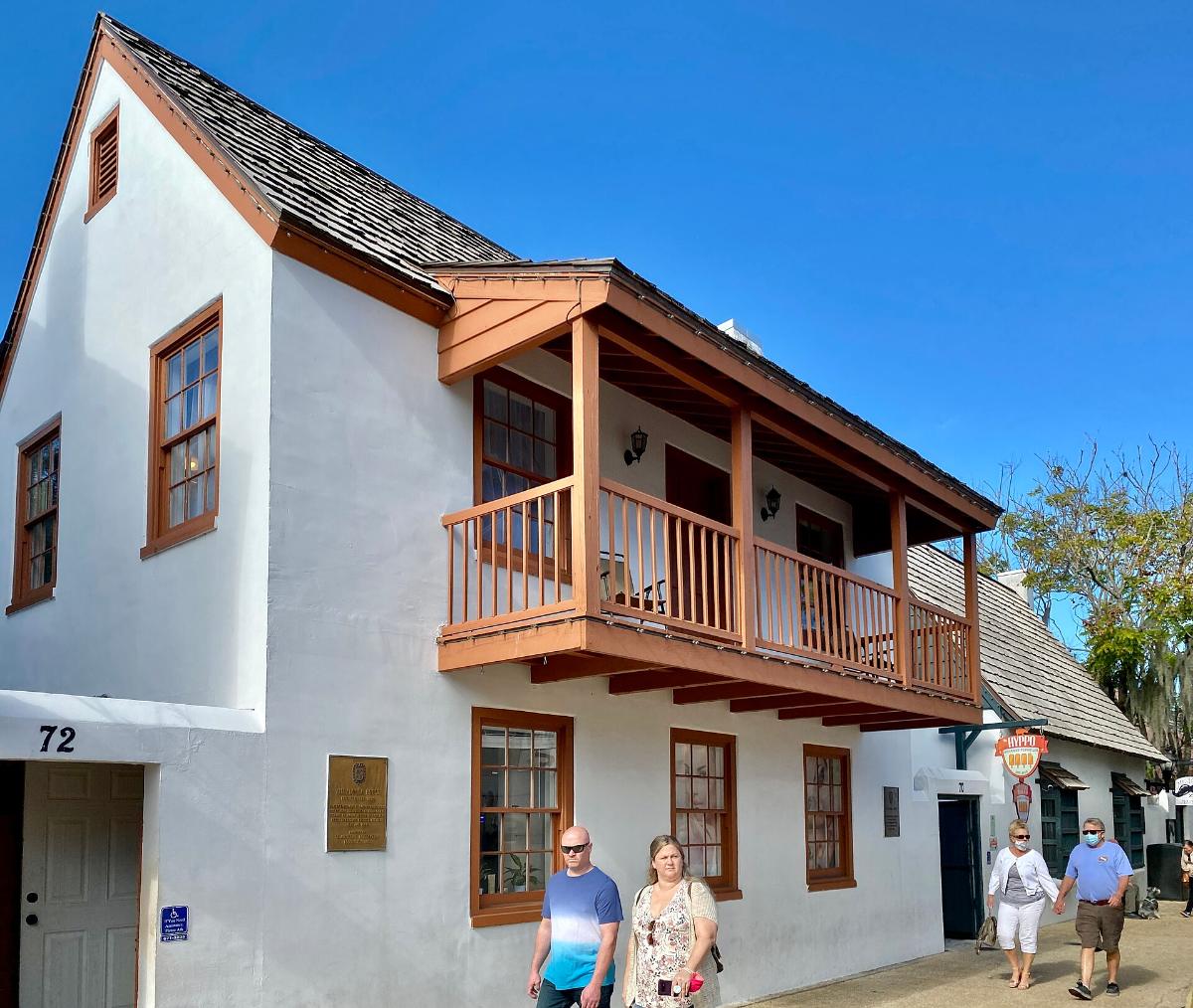
St. George Street runs south from the Old City Gates toward the Plaza through the oldest part of town. For most of the Spanish era this was a working neighborhood of soldiers, craftsmen, merchants and their families, living in small houses of wood, tabby and coquina set close to the street.
The coquina pillars of the City Gates date to 1808. They marked the one opening in the Cubo Line, a defensive wall of earth and logs that sealed the town's northern side.
A handful of buildings on and near the street are true colonial survivors. Many others are careful reconstructions, built in the 1960s and 1970s on their original sites using archaeology, old maps and records. That is why the street looks the way it might have in the 1700s, even though not every wall is that old.
What to look for
- Wooden balconies that hang over the street. They gave shade and caught the breeze.
- Walls of coquina, the shell stone, and tabby, a concrete made with oyster shell.
- Garden walls and gates that hint at the private courtyards behind them.
- Small plaques that give each house's name and date.
- Lost Treasure of St. Augustine starts at the City Gates and follows this street to the Plaza.
- Little Detectives and the Sleeping City stays on the gates and a short, gentle stretch of this street.
- The Three Keys (free) begins right here at the City Gates.
Castillo de San Marcos
Grounds and bayfront are free to walk; entering the fort has a fee
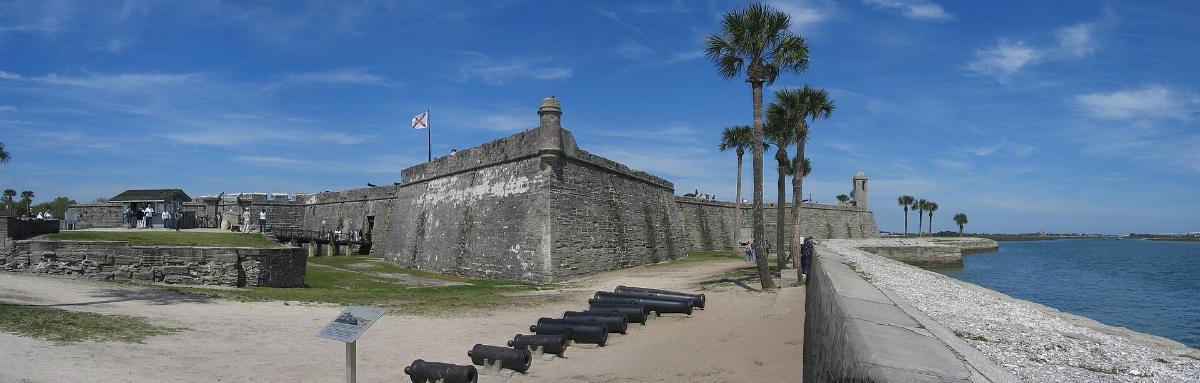
Spain began building the Castillo in 1672 and finished the main fort in 1695, after a series of wooden forts had rotted, burned or been washed away. It is the oldest masonry fort in the continental United States.
Its walls are coquina, a soft stone made of compressed seashells, quarried on Anastasia Island across the bay. In the sieges of 1702 and 1740 the walls tended to absorb cannonballs instead of shattering. The fort was never taken by force; it changed hands only by treaty, to Britain in 1763, back to Spain in 1783 and to the United States in 1821.
Under U.S. rule it was renamed Fort Marion, and in the 1870s and 1880s the Army imprisoned Native American people from the Great Plains and the Southwest here. It became a national monument in 1924, has been cared for by the National Park Service since 1933, and got its Spanish name back in 1942.
What to look for
- Tiny shells in the coquina walls. Look closely, without climbing.
- The pointed corner bastions, shaped so defenders could cover every wall.
- The moat and the low earthworks on the land side.
- Matanzas Bay, the water the fort was built to guard.
- The Secret of the Spanish Fortress is played entirely from open, free viewpoints outside these walls.
- The Three Keys (free) ends here, with a key nobody can buy.
Plaza de la Constitución
The town's central square since Spanish days
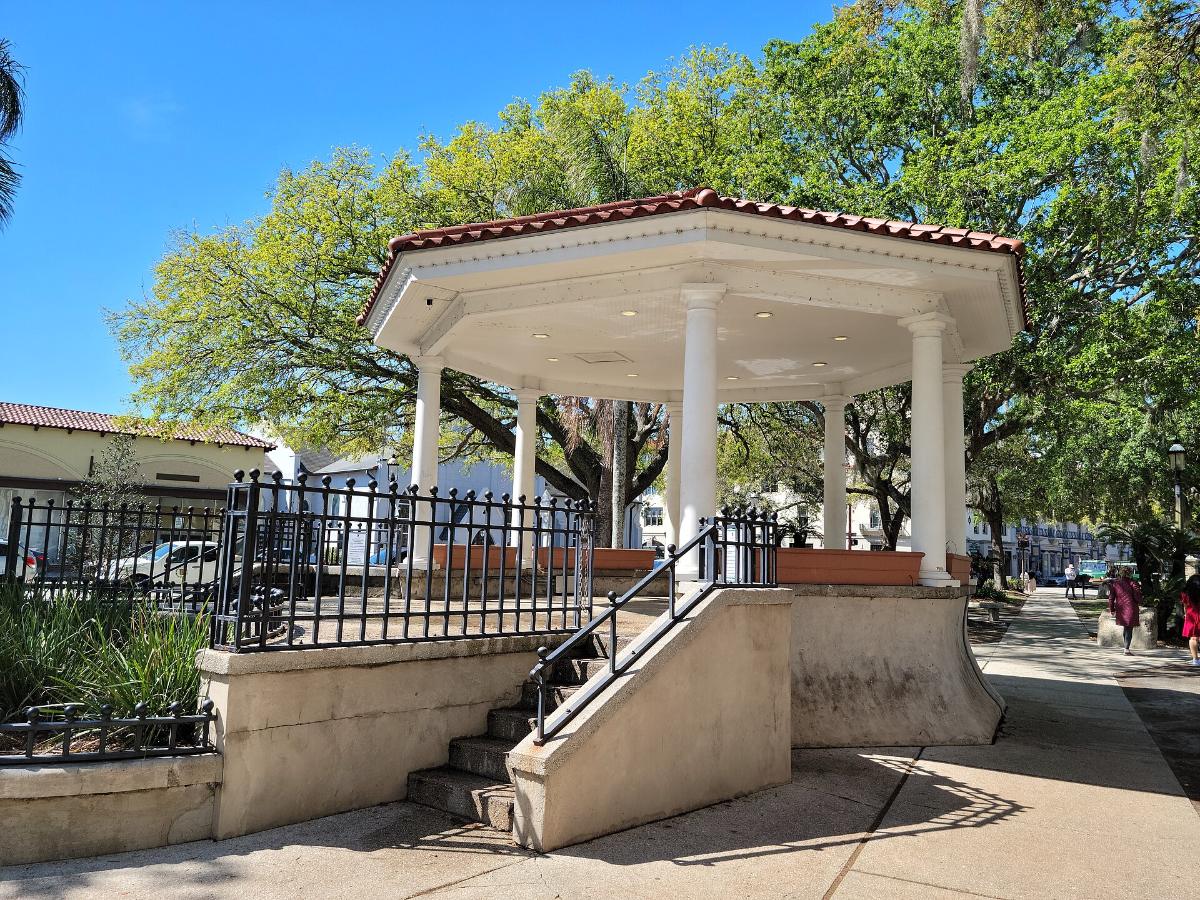
Spanish colonists laid out a central plaza here following royal town-planning rules, with the church, the governor's house and the marketplace facing it. It is one of the oldest public squares in the United States.
The white obelisk honors the Spanish Constitution of 1812. When the king revoked that constitution in 1814, monuments to it were ordered torn down across the empire. St. Augustine's survived, which makes it a rare one.
The Plaza also holds harder history. The open-sided market at its east end stands where enslaved people were bought and sold in the American period. In 1964 the Plaza was a center of civil rights marches that helped push the Civil Rights Act through Congress, and the Foot Soldiers Monument honors the local people who marched.
What to look for
- The Constitution Monument and its inscription.
- The Cathedral Basilica on the north side; its parish traces back to 1565.
- Government House on the west side.
- The Foot Soldiers Monument and the market pavilion.
- Lost Treasure of St. Augustine finishes here near the Constitution Monument.
- The Ghosts of the Ancient City ends here, where the truth lantern sorts records from rumors.
Bridge of Lions
Walk across Matanzas Bay for the best skyline views
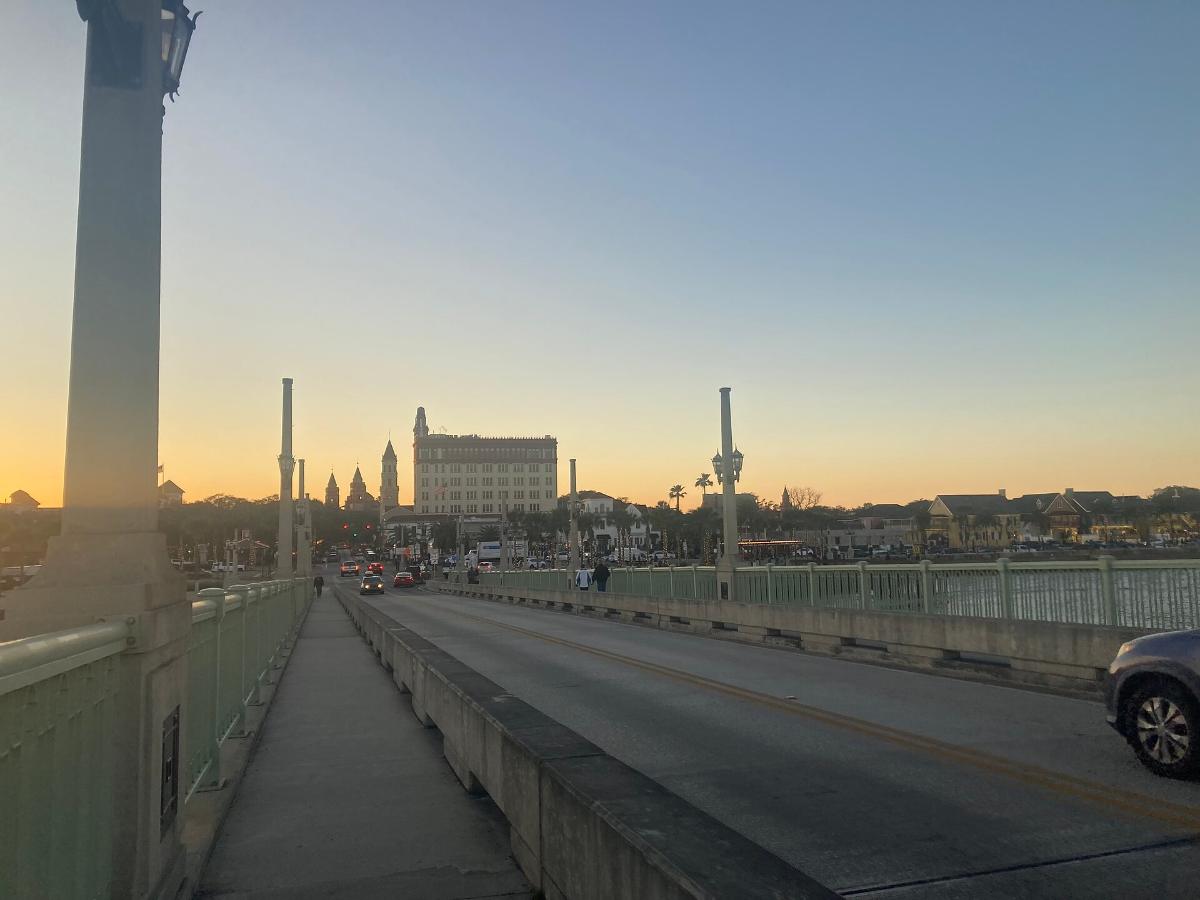
The Bridge of Lions opened in 1927 to link downtown with Anastasia Island. Its towers and arches are in the Mediterranean Revival style that was popular in Florida in the 1920s, and it is a drawbridge that still opens for boats.
The two marble lions at the town end are copies of the Medici lions in Florence, Italy. They were a gift from Dr. Andrew Anderson, a St. Augustine physician and civic leader.
Between 2006 and 2010 the bridge was rebuilt to keep its historic look. The lions were sent away for restoration and came back to their posts in 2011.
What to look for
- The two lions. Each one rests a paw on a ball.
- The bridge tender's houses on the towers.
- The view back to the Castillo and the bayfront.
- Boats lining up when the drawbridge opens.
- Lost Treasure of St. Augustine and The Ghosts of the Ancient City both finish at the Plaza, a two-minute walk from the lions.
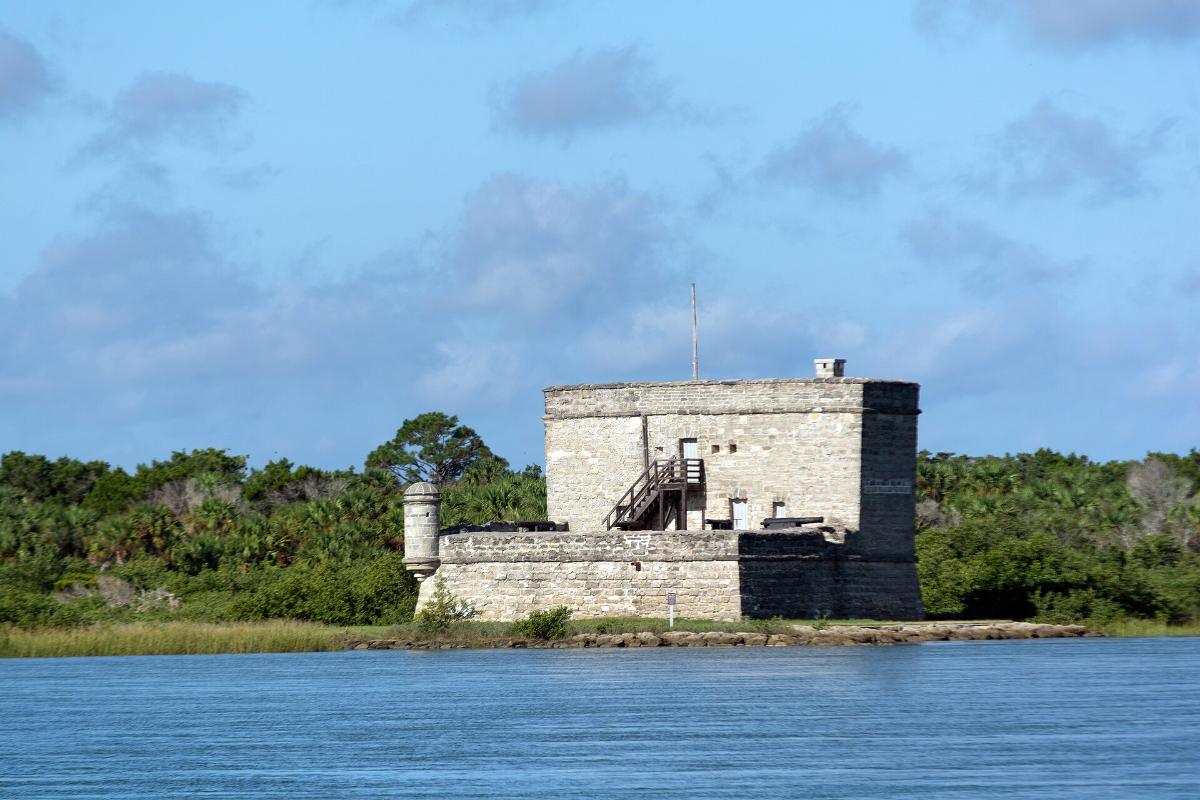
Fort Matanzas
The National Park Service has offered a free ferry to the tower; check the day’s schedule
About 14 miles south of town, Matanzas Inlet was St. Augustine's back door. In 1740 a British fleet used it to blockade the city, so Spain built this coquina watchtower beside the inlet between 1740 and 1742. In 1742 its cannons helped turn British ships away.
The name has a dark origin. Matanzas means “slaughters” in Spanish. In 1565, near the inlet, soldiers under Pedro Menéndez de Avilés killed most of the shipwrecked French Huguenots of Jean Ribault, ending France's attempt to hold Florida.
Like the Castillo, the fort became a national monument in 1924. The visitor center, nature trail and beach are on the mainland side of the river.
What to look for
- The small tower, built to guard a narrow inlet rather than a whole city.
- Coquina walls like the Castillo's, on a much smaller scale.
- The river and marsh that ships had to pass.
- Birds, dolphins and the beach nearby.
- The Secret of the Spanish Fortress tells the other half of the story back in town: why the Castillo itself held.
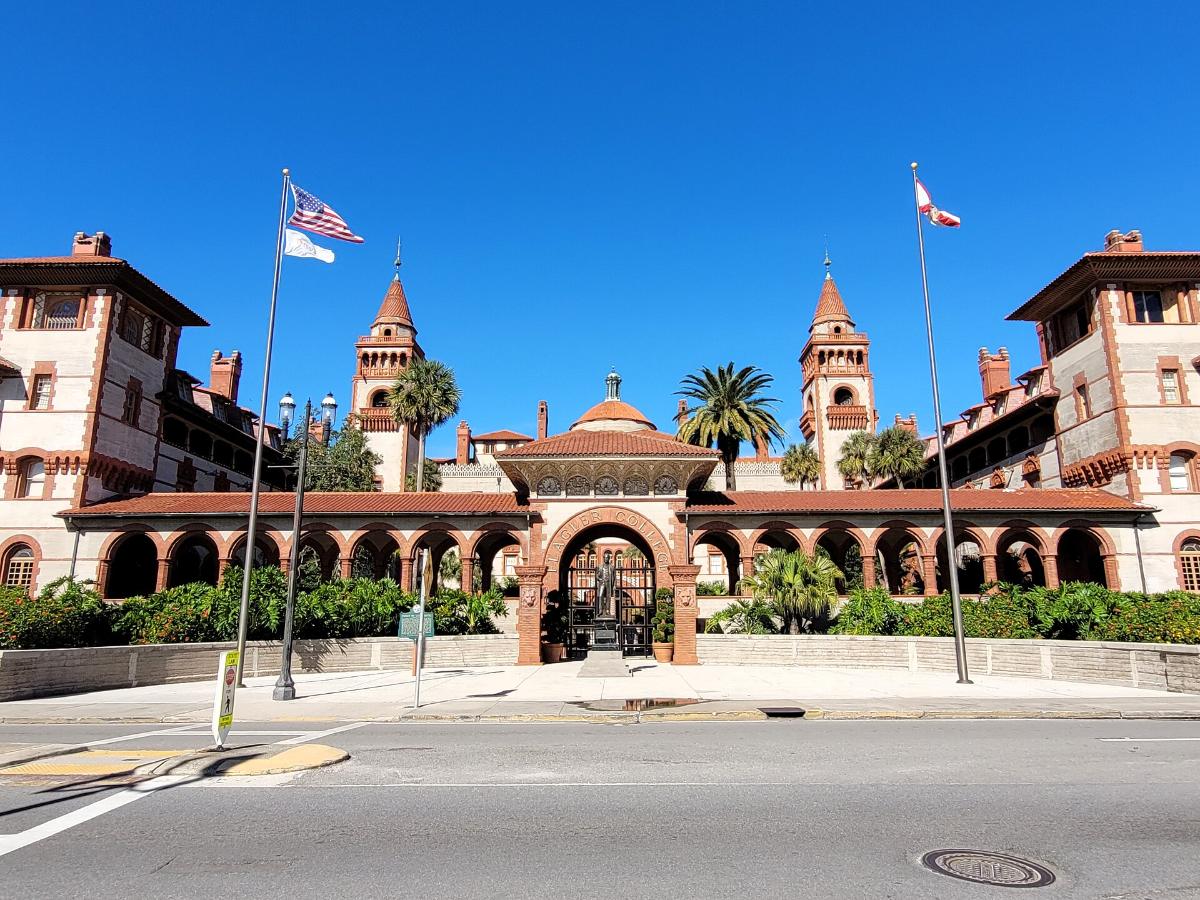
Flagler College
Admire the former Hotel Ponce de León from King Street; tours inside are ticketed
Railroad and oil tycoon Henry Flagler opened the Hotel Ponce de León in January 1888 to bring wealthy winter visitors to St. Augustine. The young architects John Carrère and Thomas Hastings designed it in a Spanish Renaissance style.
It was one of the first large buildings in the country made of poured concrete, mixed with crushed coquina from Anastasia Island. It had electric lights from the start, and its dining room glows with stained glass from Louis Comfort Tiffany's studios.
The hotel became the heart of Flagler College in 1968 and is a National Historic Landmark. Across King Street, Flagler's Hotel Alcazar is now the Lightner Museum and City Hall.
What to look for
- The twin towers, which hid water tanks.
- The gates and the shell-stone texture of the walls.
- Terra-cotta details: lions, shells and Spanish symbols.
- The Lightner Museum across the street.
- The Gilded Age Conspiracy is played on the sidewalks outside this building and the Lightner Museum.
Now solve them.
Start with the free Three Keys walk from the City Gates to the Castillo, or pick a full adventure for your group.
Free sights, answered
What can you see for free in St. Augustine?
St. George Street, the Old City Gates, the grounds and bayfront around the Castillo de San Marcos, the Plaza de la Constitución, the Bridge of Lions, the outside of Flagler College and, south of town, Fort Matanzas, where the National Park Service has offered a free ferry to the watchtower.
Is the Castillo de San Marcos free?
Walking the grounds, the green and the seawall around the fort is free. Going inside the fort requires a National Park Service entrance fee.
Why is it called Matanzas?
Matanzas means "slaughters" in Spanish. In 1565, near the inlet, Spanish soldiers under Pedro Menéndez de Avilés killed most of Jean Ribault's shipwrecked French Huguenots.
Who donated the lions on the Bridge of Lions?
Dr. Andrew Anderson, a St. Augustine physician and civic leader. The marble lions are copies of the Medici lions in Florence, Italy.
What was the Hotel Ponce de León?
Henry Flagler's luxury hotel, opened in 1888 and designed by Carrère and Hastings. Since 1968 it has been the centerpiece of Flagler College.
Hours, fees, ferry schedules and access change. Confirm with each site before you go. History sources are listed on our sources page.